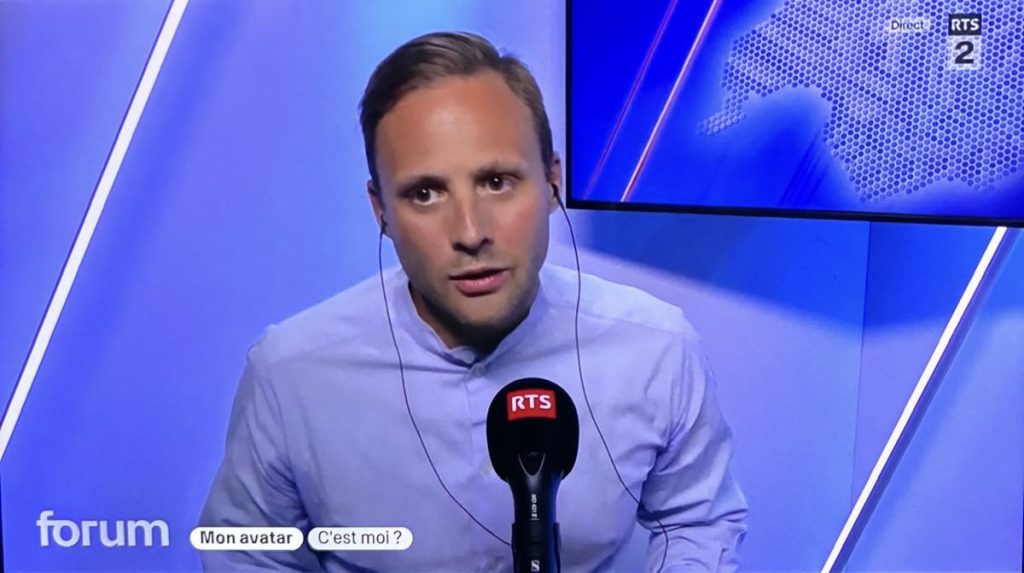
J’étais l’invité de Forum hier sur la RTS pour discuter de notre identité dans la sphère numérique. Une discussion qui prolonge les recherches que nous menons à l’Université de Neuchâtel avec Alexandre Declos autour des “Digital Selves”.
Postdoctoral researcher & lecturer in Philosophy | University of Neuchatel
J’étais l’invité de Forum hier sur la RTS pour discuter de notre identité dans la sphère numérique. Une discussion qui prolonge les recherches que nous menons à l’Université de Neuchâtel avec Alexandre Declos autour des “Digital Selves”.
J’ai eu le plaisir d’être invité dans l’émission “La Boucle” de Canal Alpha pour parler de mes recherches sur les “moi numériques” (digital selves), menées avec Alexandre Declos.
À partir d’une question en apparence simple — suis-je mon avatar ? — nous avons discuté de la possibilité que certaines entités numériques puissent modifier les frontières de notre identité personnelle.
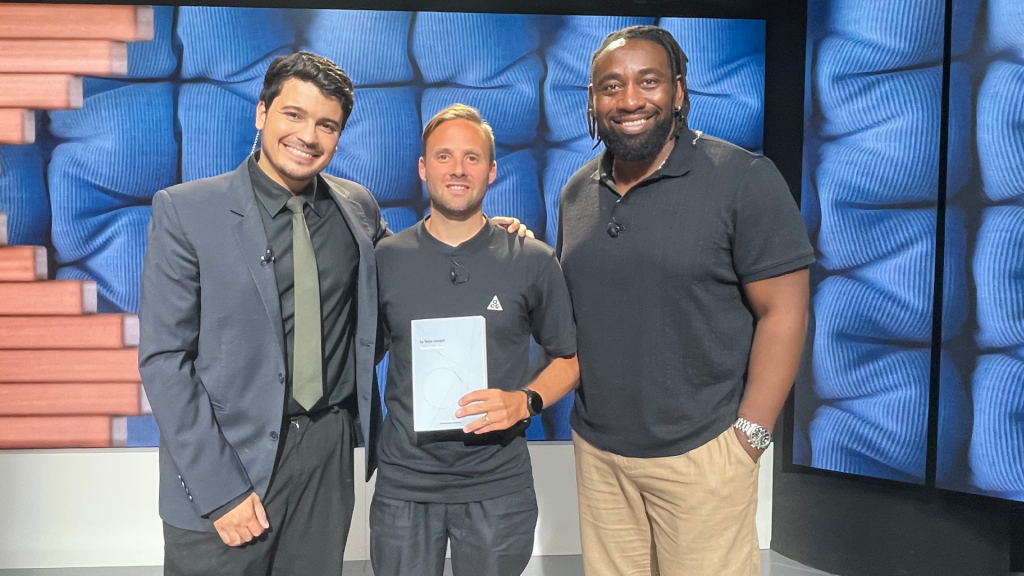
J’ai eu le plaisir d’être interviewé dans La Matinale de RTN à l’occasion de la parution de « Digital Selves », coécrit avec Alexandre Declos et publié dans la revue Synthese.

Je suis très heureux d’annoncer la parution de « Fission et prison », un article coécrit avec Benoit Gaultier, dans un numéro spécial de la Revue de Métaphysique et de Morale consacré à la responsabilité, sous la direction de Simon-Pierre Chevarie-Cossette.
L’article peut être consulté ici : https://doi.org/10.3917/rmm.262.0047
Résumé :
Traditionnellement mobilisés en métaphysique, les cas de fission – qui mettent en scène la duplication d’états mentaux d’un individu afin qu’ils soient instanciés par d’autres individus – suscitent l’intuition suivante : une action accomplie avant une fission devrait être imputée aux individus qui en résultent dès lors que ces derniers héritent de la structure mentale de l’individu d’origine. Cette intuition entre toutefois en tension avec une autre, apparemment tout aussi forte, selon laquelle l’attribuabilité d’une action à une personne requiert qu’elle soit numériquement identique à celle ayant accompli cette action. Dans cet article, nous articulons d’abord ces deux intuitions, puis montrons qu’aucune des principales théories de l’identité personnelle diachronique ne parvient à les rendre compatibles. Enfin, nous défendons l’abandon de l’exigence d’identité stricte portée par la seconde intuition, au profit d’un critère fondé sur la continuité psychologique. Cette approche, soutenons-nous, reflète plus fidèlement nos intuitions morales fondamentales en matière de justice.

J’ai eu le plaisir de m’entretenir avec le Bureau Presse de l’Université de Neuchâtel à propos de « Digital Selves », un article qu’Alexandre Declos et moi-même avons récemment publié dans la revue Synthese.
Retrouvez l’interview écrite ici, ainsi que la vidéo ci-dessous.
Delighted to share that our paper « Digital Selves », co-authored with Alexandre Declos, has been published in Synthese. In this article, we defend a realist account of our existence in the digital world.
Read it here: https://doi.org/10.1007/s11229-026-05705-8

Quel est le lien entre musique et temps ?
J’ai eu le plaisir d’en discuter avec la compositrice Florencia Novoa dans une émission de la RTS consacrée à la musique non linéaire.

I am delighted to share the publication of my new open-access paper, “Time as a Moral Defense?”, published in Philosophies as part of the special issue “Debating Temporal Ontology: The Existence of Yesterday and Tomorrow”, edited by Kristie Miller.
The paper explores a simple question: can the mere passage of time constitute a moral defense? In other words, can someone legitimately respond to a moral accusation by saying, “Yes, I did it, but it happened a long time ago”? I argue that the answer is no.
Read it here: https://www.mdpi.com/2409-9287/11/4/103

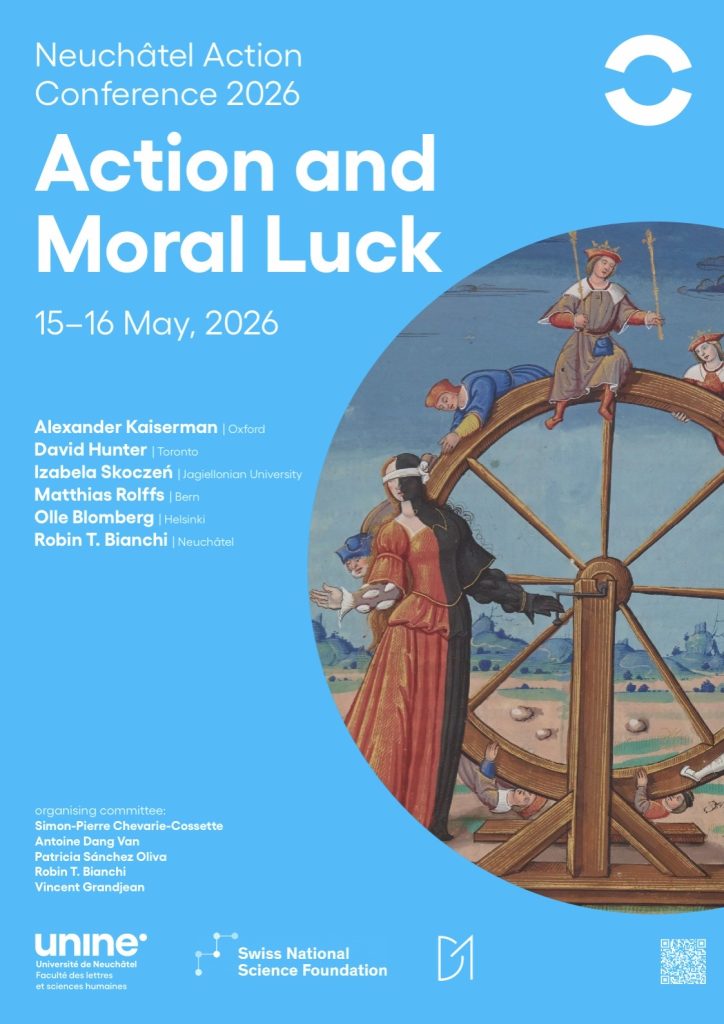
I am delighted to co-organize, together with Prof. Simon-Pierre Chevarie-Cossette and his team, the Neuchâtel Action Conference 2026, dedicated to action and moral luck, which will take place on May 15-16, 2026 at the University of Neuchâtel.
The conference will address a central topic in contemporary philosophy, bringing together leading international scholars.
We warmly invite you to explore the program and join us for one or more sessions.
👉 https://www.unine.ch/philo/evenement/the-neuchatel-action-conference-2026
Alexandre Declos and I had the opportunity to present our paper “Mental Artworks” at the workshop “Mental Artifacts and Artifactual Events”, held at the University of Genoa from 25 to 27 November 2025.
On that occasion, we received excellent feedback and are hopeful that this will help us bring the paper to publication in the near future.
